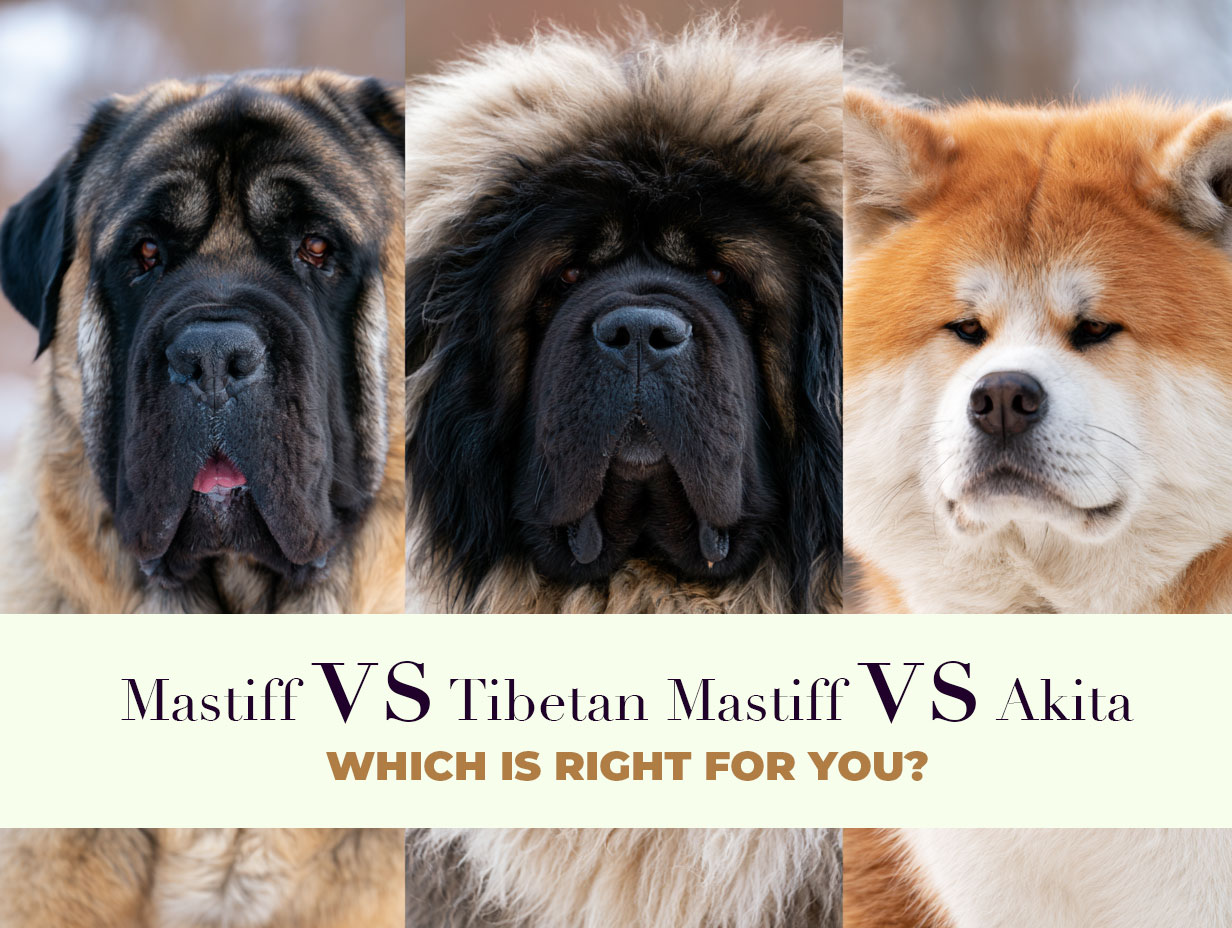
Understanding These Three Working Giants
The Mastiff, Tibetan Mastiff, and Akita represent distinct branches of large working dogs. Each carries different expectations around daily maintenance, household integration, and long-term health. Prospective owners must weigh documented breed tendencies in grooming demands, shedding volume, interactions with other pets, overall robustness, and vocal tendencies before committing.
Key Comparison Criteria
Easy Grooming
The Mastiff rates low on grooming intensity with its short coat that requires only occasional brushing. The Tibetan Mastiff demands far more attention due to its dense double coat that mats without weekly sessions. The Akita falls in the middle, needing regular brushing especially during seasonal coat blows but avoiding the full weekly commitment of the Tibetan Mastiff.
Barking Control
Both the Mastiff and Akita score low on barking, making them quieter household members that rarely alert without cause. The Tibetan Mastiff rates higher and tends to vocalize more readily at perceived threats, requiring consistent training to prevent nuisance barking in suburban settings.
Low Shedding
The Mastiff produces moderate shedding that stays manageable with routine vacuuming. The Tibetan Mastiff sheds heavily year-round with massive seasonal blows that coat furniture and floors. The Akita also sheds substantially twice a year, though less constantly than the Tibetan Mastiff.
Pet Friendly
The Mastiff shows moderate compatibility with other pets when socialized early. The Tibetan Mastiff and Akita both score lower, often displaying same-sex aggression or strong prey drive that makes multi-pet homes challenging without strict management.
Health Robustness
The Mastiff carries the lowest health rating among the three, with well-documented risks of hip dysplasia, heart conditions, and shortened lifespan around seven to nine years. The Tibetan Mastiff and Akita rate higher but still face breed-specific issues including autoimmune disorders in Akitas and hip problems in Tibetan Mastiffs.
How They Stack Up Day-to-Day
Daily life with a Mastiff centers on managing its size during walks and preventing overheating due to its massive frame. Owners report needing reinforced furniture and vehicles because even a calm Mastiff can overwhelm standard household items. Training sessions remain short because the breed tires quickly yet responds steadily to consistent commands.
A Tibetan Mastiff requires more space and mental stimulation to channel its independent streak. Its coat needs protection from matting during wet weather, and owners often find themselves managing heavy seasonal shedding that affects air quality indoors. Vocal tendencies mean early boundary training becomes essential to avoid conflicts with neighbors.
The Akita demands firm leadership during walks to prevent pulling or selective listening. Its shedding cycles create visible fur piles that require dedicated cleanup tools. Pet introductions must stay supervised because the breed frequently shows intolerance toward unfamiliar dogs of the same sex.
The Lifestyle Match
Families with young children and limited time for grooming will find the Mastiff more practical despite its health vulnerabilities. The breed tolerates moderate activity levels and adapts to suburban yards better than the other two when daily exercise stays consistent. However, its low health score means budgeting for veterinary care becomes non-negotiable.
Rural properties with experienced owners suit the Tibetan Mastiff best. Its watchdog rating of ten makes it effective for acreage protection, yet the high shedding and barking scores rule it out for apartments or dense neighborhoods. Pet-friendly scores remain low, so single-dog households work better.
First-time owners seeking lower barking and moderate grooming often lean toward the Akita, but its pet-friendly rating of three limits it to homes without other animals. The breed fits active adults who can provide structured training and handle seasonal coat maintenance without frustration.
Our Bottom Line
These three breeds share working heritage but diverge sharply on maintenance and compatibility. The Mastiff offers the easiest grooming path and quietest presence yet carries the heaviest health burden. The Tibetan Mastiff excels as a property guardian but demands the most coat care and vocal management. The Akita balances moderate grooming with strong watchdog instincts while remaining the least tolerant of other pets. Each choice carries clear trade-offs in daily effort and long-term costs.