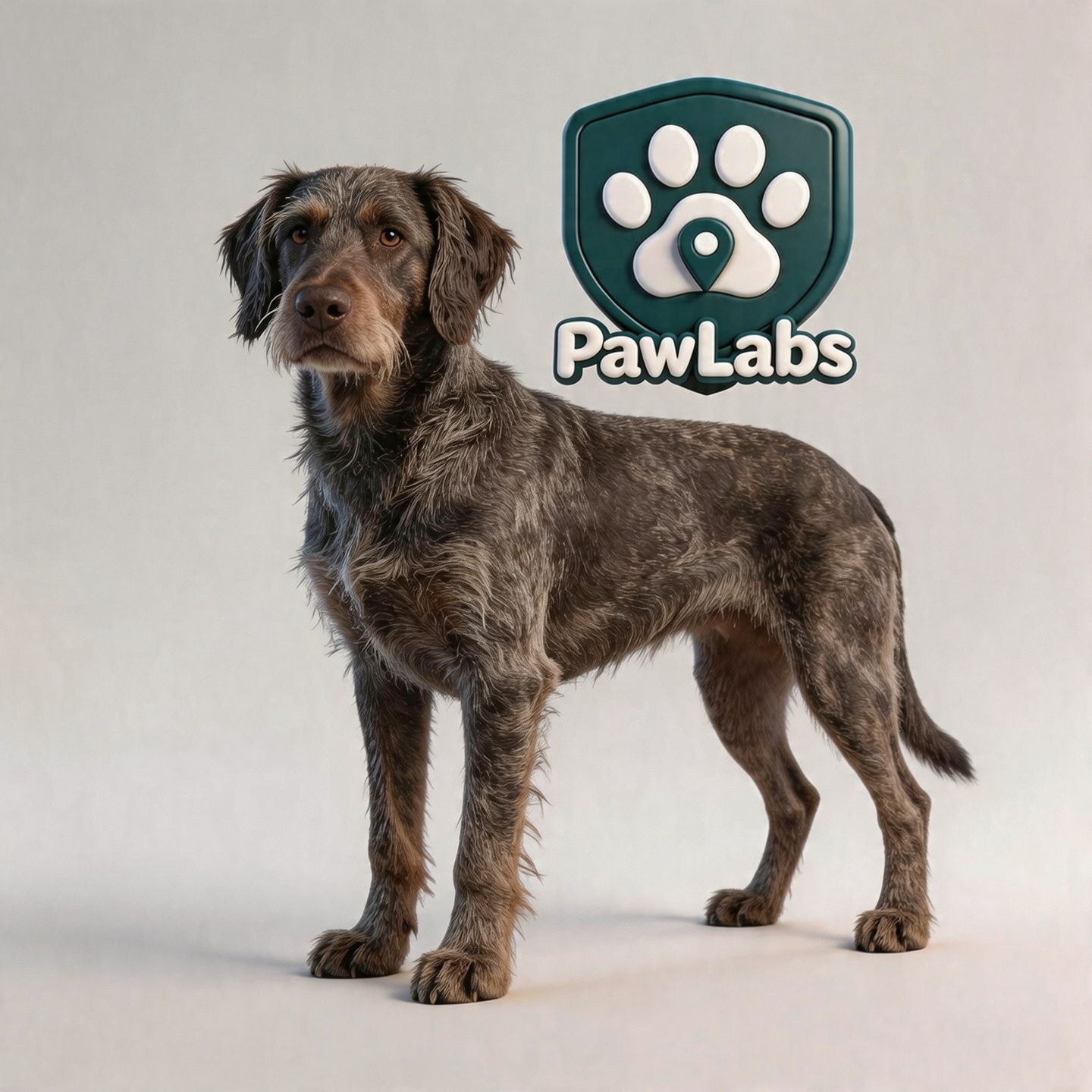
German Wirehaired Pointer
A rugged, energetic hunter with a loyal heart and relentless drive.
Original Role: Hunting and pointing game
💪 Strengths
- + Exceptional hunting and tracking abilities
- + Versatile in various terrains and weather conditions
⚠️ Weaknesses
- − High energy can be overwhelming for inactive owners
- − Tendency toward stubbornness if not properly trained
📜 Breed History
The German Wirehaired Pointer, often called the 'Deutsch Drahthaar' in its native land, emerged in Germany during the late 19th century. Bred as a versatile hunting dog, this breed was developed to track, point, and retrieve game across varied terrain, from dense forests to open fields, often in harsh weather. German breeders sought a dog with a tough, wiry coat to protect against brambles and cold, combining traits from the Pudelpointer, Griffon, and German Shorthaired Pointer, with some influence from terrier breeds for tenacity.
Their original purpose was clear: to be an all-purpose gundog capable of working before and after the shot. First recognized by the German Kennel Club in the early 1900s, the breed’s standard prioritized function over form, emphasizing stamina and a keen nose. They made their way to the United States by the 1920s, gaining traction among hunters who valued their ruggedness. The American Kennel Club officially recognized the German Wirehaired Pointer in 1959, cementing its place in the sporting group. Today, while still a favorite among hunters, many are cherished family companions, though their high drive remains a hallmark of their heritage.
A Hunter’s Soul in a Wire-Coated Package
I’ve spent countless mornings in damp fields with German Wirehaired Pointers, watching them lock onto a scent with an intensity that’s almost palpable. This breed isn’t just a dog; it’s a working machine with a heart full of loyalty and a brain wired for problem-solving. They’re not for the faint of heart or the couch potato. I’ve seen these dogs push through thorn bushes without a whimper, then curl up at your feet like they’ve had a lazy day. But don’t be fooled by that wiry beard and those soulful eyes—they’ve got energy to burn and a stubborn streak that’ll test your patience if you’re not ready to lead.
Temperament & Personality
Living with a German Wirehaired Pointer is like having a best friend who’s always ready for an adventure but occasionally forgets you’re not a fellow hunting dog. They’re deeply loyal, often bonding tightly with one or two family members. I’ve watched mine shadow me from room to room, not out of clinginess, but because they want to be part of the action. They’re not overly cuddly—don’t expect a lap dog—but they’ll show affection with a nudge or a quiet lean against your leg after a long day.
They’ve got a playful side, especially as puppies, but it’s often paired with a serious, focused demeanor when they sense a job to do. That hunting instinct kicks in unexpectedly. I’ve had one stop mid-walk, freeze, and point at a squirrel like it’s a pheasant in the brush. They’re not naturally aggressive, but they can be aloof with strangers, sizing them up before deciding if they’re worth a wag. With kids, they’re generally patient if socialized early, though their high energy means they might accidentally knock over a toddler in a burst of excitement.
Exercise & Activity Needs
If you’re not prepared to tire out a German Wirehaired Pointer, don’t even think about bringing one home. These dogs need serious exercise—think 1 to 2 hours daily of vigorous activity, not just a leisurely stroll. I’ve taken mine on 5-mile runs through rough trails, and they’re still ready to play fetch when we get back. They were bred to hunt all day, and that endurance doesn’t disappear just because they live in a suburban backyard. Swimming, hiking, or structured activities like agility courses are gold for them. I’ve seen one dive into icy water to retrieve a toy without a second thought.
Mental stimulation is just as critical. Without a job—whether it’s scent work or a good puzzle toy—they’ll find their own entertainment, and trust me, you won’t like the results. I once left mine alone for too long, and they turned a corner of my fence into a chew toy. A bored German Wirehaired Pointer is a destructive one, so keep them busy or pay the price.
Training & Intelligence
These dogs are sharp, no question. I’ve taught mine complex commands like directional retrieves in a matter of weeks. Their intelligence shines when they’re working on a task they understand, like tracking a scent or fetching on command. But here’s the catch—they’ve got a stubborn edge. If they don’t see the point of what you’re asking, good luck getting compliance. I’ve had one flat-out ignore a ‘sit’ command during a training session because a bird flew by and stole their focus.
Consistency and firmness are non-negotiable. They respond best to positive reinforcement, but you’ve got to be the alpha, or they’ll walk all over you. Early socialization is key; without it, their protective instincts can make them wary of other dogs or people. I start exposing mine to new environments as puppies, from busy parks to loud noises, to build confidence. Patience pays off—they’re not impossible, just strong-willed.
Health & Lifespan
German Wirehaired Pointers are generally hardy, with a lifespan of 12 to 14 years if well cared for. But they’re not immune to health issues. Hip dysplasia is a concern—I’ve known a few who developed it later in life, slowing their once-boundless energy. Regular vet checks and weight management help, but it’s a genetic roll of the dice. Elbow dysplasia pops up too, especially in active lines, so screening breeding stock matters if you’re buying from a breeder.
They can also face eye conditions like cataracts or progressive retinal atrophy, which I’ve seen rob a dog of their sharp vision over time. Heart issues, like dilated cardiomyopathy, are less common but devastating when they strike. Vet bills can add up if you’re unlucky, so pet insurance isn’t a bad idea. I’ve also noticed some are prone to ear infections thanks to those floppy ears trapping moisture—cleaning after swims is a must. Overall, they’re tough, but not invincible.
Grooming & Maintenance
That wiry coat is a blessing and a curse. It’s built to repel dirt and protect them in rough terrain, so they don’t need baths often. I’ve hosed mine down after muddy hunts, and they’re good as new. But weekly brushing is necessary to prevent matting, especially around the legs and underbelly. I use a slicker brush to tackle tangles, spending about 20 minutes every few days. Their beard and eyebrows give them character, but food and water cling to it—keep a towel handy.
Shedding isn’t excessive compared to some breeds, but you’ll still find coarse hairs on your couch during seasonal changes. Nail trimming every few weeks keeps them from clicking on hardwood, and don’t skip dental care—I’ve seen neglect lead to pricey vet cleanings. They’re not high-maintenance, but you can’t ignore grooming entirely.
Diet & Nutrition
Feeding a German Wirehaired Pointer means fueling a high-octane engine. They thrive on high-quality, protein-rich kibble or raw diets tailored for active breeds. I’ve kept mine on a mix of dry food and occasional raw meat, adjusting portions based on their activity—about 2.5 to 3.5 cups of kibble daily, split into two meals. Puppies need more frequent feeding to support growth, and I’ve learned the hard way that overfeeding leads to weight gain, which stresses their joints.
They’re not typically picky eaters, but some develop sensitivities to grains or chicken. I had one who needed a fish-based diet after endless itching. Watch for bloat, a risk in deep-chested breeds—small, frequent meals and no exercise right after eating are precautions I swear by. Fresh water is non-negotiable, especially after long runs. Talk to your vet about caloric needs; these dogs burn fast but can pack on pounds if you’re not careful.
Living Conditions
Apartment life? Forget it. I’ve tried keeping a young German Wirehaired Pointer in a small space, and the walls practically vibrated with their pent-up energy. They need room to roam—a house with a secure, spacious yard is ideal. They’ll patrol every inch, sniffing for critters, so fencing is critical unless you want to chase them down the street after a rabbit.
Climate-wise, their wiry coat handles cold and wet better than extreme heat. I’ve hunted with mine in light snow, and they’re unfazed, but during hot summers, I limit outdoor time to early mornings. They’re adaptable if exercised properly, but they’re happiest in rural or suburban settings where they can stretch their legs. City dwellers beware—they’ll go stir-crazy without access to wide-open spaces.
Who Should Get This Breed
If you’re an active outdoorsman or woman, this breed might be your perfect match. Hunters, runners, and hikers—I’ve seen German Wirehaired Pointers thrive with owners who match their energy and give them purpose. They’re fantastic for folks who want a dog to join them on long treks or field work, and their loyalty makes them a steadfast companion. If you’ve got time to train and a lifestyle that includes daily physical challenges, you’ll find their intelligence and drive rewarding. I’ve met families with older kids who do well with them too, provided they’re committed to exercise and structure.
Who Should NOT Get This Breed
If you’re sedentary or live in a tiny apartment, steer clear. I’ve seen these dogs become frustrated and destructive when paired with owners who can’t keep up. They’re not suited for people who work long hours and leave them alone—they’ll develop separation anxiety or bad habits faster than you can blink. First-time dog owners might struggle with their stubbornness; I’ve watched novices get outmaneuvered by a clever Pointer who sensed weakness. If you want a low-energy pet to lounge with or don’t have hours to dedicate daily, this isn’t your dog. They demand engagement, and without it, everyone suffers.
❓ German Wirehaired Pointer FAQs
The questions people ask most, answered from this breed's trait scores.
Is the German Wirehaired Pointer good with children?
The German Wirehaired Pointer scores 6/10 for child-friendliness, making it usually fine with children who have been taught to handle a dog respectfully. That score reflects the breed's typical temperament, not any individual animal — early socialisation and how the dog was raised matter just as much. Supervise interactions with toddlers whatever the breed.
Does the German Wirehaired Pointer get along with other pets?
Scoring 5/10 for pet-friendliness, the German Wirehaired Pointer is usually fine with other pets once introduced properly. Prey drive matters here as well as sociability: breeds built to chase can live happily with a household cat they grew up with and still pursue an unfamiliar one.
How much exercise does the German Wirehaired Pointer need?
The German Wirehaired Pointer rates 9/10 for energy and needs two hours or more a day, every day, including the days you do not feel like it. Under-exercised, this is a breed that finds its own entertainment — usually at the expense of your furniture. The breed was originally developed for hunting and pointing game, which is where that requirement comes from.
Does the German Wirehaired Pointer shed a lot?
At 4/10 for shedding, the German Wirehaired Pointer sheds lightly. It has a medium wire coat. Worth knowing: low shedding is not the same as hypoallergenic — most people react to proteins in dander and saliva, not to hair itself, so no breed is genuinely allergy-free.
Is the German Wirehaired Pointer easy to train?
The German Wirehaired Pointer scores 7/10 for trainability, making it responsive and straightforward to train. It scores 8/10 for intelligence — worth separating from trainability, because a clever breed that has decided not to listen is harder work than a simpler one that wants to.
What is the average lifespan of the German Wirehaired Pointer?
The German Wirehaired Pointer typically lives 12–14 years. We rate the breed 7/10 for general health robustness. Individual lifespan depends heavily on genetics, weight management and veterinary care.
How big does the German Wirehaired Pointer get?
A full-grown German Wirehaired Pointer usually weighs 50–70 lbs and stands roughly 22–26 inches at the shoulder. That places it in the medium size band. Males generally sit at the upper end of both ranges.
Does the German Wirehaired Pointer bark a lot?
Rated 5/10 for barking, the German Wirehaired Pointer barks a moderate amount. Training and adequate exercise both reduce nuisance barking, but they will not turn a naturally vocal breed into a silent one.
Is the German Wirehaired Pointer suited to apartment living?
The German Wirehaired Pointer is a difficult fit for apartment living. It scores 6/10 for adaptability, 9/10 for energy and 5/10 for barking — the three traits that decide this. Floor space matters far less than whether the breed can settle indoors and stay quiet while you are out.
Is the German Wirehaired Pointer a good choice for first-time owners?
On balance the German Wirehaired Pointer is manageable for a first-time owner who is willing to put the work in early, based on its trainability (7/10), adaptability (6/10) and energy level (9/10). The most common reason a first dog does not work out is a mismatch between the breed's daily needs and the owner's actual routine, rather than anything about the breed itself.
Written and reviewed by PawLabs Editorial Team
We build PawLabs from published kennel club breed standards and veterinary reference sources. Profiles are drafted with AI assistance against that source data, then reviewed and corrected by a person before anything is published. We say so because you should know how the thing you're reading was made. How we research breeds · Report a correction
Note: Breed profiles are general reference, not veterinary advice. For anything concerning your own animal, talk to a vet who can examine them.