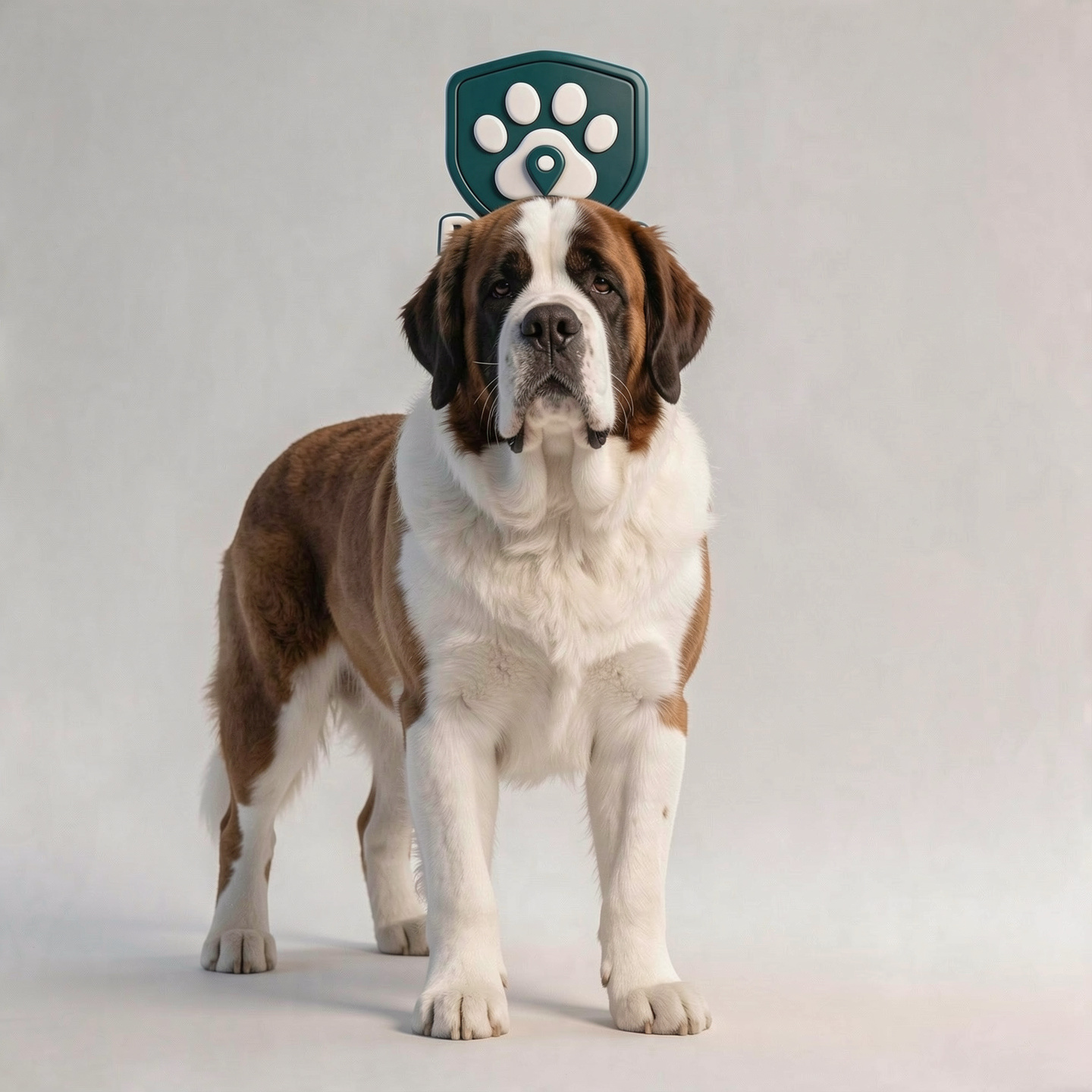
Saint Bernard
A gentle giant with a heroic heart, built for rescue and companionship.
Original Role: Mountain rescue and companionship
💪 Strengths
- + Exceptional gentleness with children and families
- + Natural instinct for protection and rescue
⚠️ Weaknesses
- − High maintenance due to size, shedding, and health issues
- − Short lifespan compared to smaller breeds
📜 Breed History
The Saint Bernard’s story begins in the Swiss Alps, where these massive dogs were bred by monks at the Great St. Bernard Hospice as early as the 17th century. Their original purpose was noble and lifesaving—rescuing travelers lost or buried in snow during treacherous mountain crossings. With an uncanny sense of direction and an ability to detect people under deep snow, they became legendary for their heroic efforts, often carrying small barrels of brandy around their necks to revive the stranded. The breed likely descends from ancient Molosser dogs brought to the region by Roman armies, mixed with local working dogs, creating a powerful, cold-resistant giant.
By the 19th century, their reputation as rescue dogs spread across Europe, and a Saint Bernard named Barry became a symbol of the breed’s valor, reportedly saving over 40 lives. The breed was refined over time, with both smooth and rough-coated varieties emerging, though the long-haired version became more iconic. Today, while few Saint Bernards perform alpine rescues, their legacy as gentle, protective companions endures. Recognized by major kennel clubs like the AKC since 1885, they remain a symbol of strength and kindness, though their size and care needs have shifted their role mostly to family pet.
The Saint Bernard: A Gentle Giant with a Hero’s Heart
I’ve spent years around Saint Bernards, and let me tell you, there’s nothing quite like the presence of this breed. They’re the epitome of a gentle giant—towering over most other dogs, with a soulful expression that seems to say, “I’ve got your back.” I’ve watched a 150-pound Saint Bernard lie patiently while a toddler climbs over them like a jungle gym, not even flinching. But don’t let that calm demeanor fool you into thinking they’re low-maintenance. These dogs are a commitment, from the sheer volume of fur they shed to the heartbreakingly short time you’ll have with them. If you’re ready for a dog that’s more family member than pet, a Saint Bernard might just steal your heart.
Temperament & Personality
Living with a Saint Bernard is like having a big, furry babysitter in the house. They’re incredibly gentle, especially with kids—I’ve seen them nudge a wobbly toddler back to safety with a nose the size of a softball. Their patience is almost saintly (pun intended), and they’ve got a quiet, protective nature that makes you feel secure just having them around. But they’re not pushovers. I’ve had moments where a Saint Bernard stubbornly planted themselves between me and a perceived threat, like a delivery guy who got too close to the porch.
They’re not overly excitable, which is a relief given their size, but they do have a playful side that comes out in short bursts—think a slow-motion romp in the yard before they flop down for a nap. One thing to watch for is their sensitivity. I’ve known Saints who sulk for hours if they think they’ve disappointed you. They thrive on being part of the family, so leaving them alone too long can lead to some serious moping, or worse, a chewed-up doorframe from anxiety.
Exercise & Activity Needs
Don’t expect a Saint Bernard to keep up with you on a 5-mile run. These dogs were bred for strength and endurance in short, intense bursts—like digging through snow to rescue someone—not for marathons. A couple of moderate walks a day, maybe 30 to 45 minutes total, is usually enough to keep them content. I’ve taken Saints on hikes in cooler weather, and they’ll lumber along happily, but overdo it, and you’ll be carrying 150 pounds of exhausted dog back to the car. They do enjoy a good romp in a fenced yard, especially if there’s snow to roll in—watching them plow through a drift is pure joy.
That said, their low energy can be a double-edged sword. Without enough activity, they’re prone to weight gain, which is disastrous for their joints. I’ve seen overweight Saints struggle to stand up after lying down, and it’s heartbreaking. Keep an eye on their activity, especially as puppies, because overexertion while their bones are still growing can lead to lifelong issues.
Training & Intelligence
Saint Bernards are smart, no question—I’ve seen them figure out how to open a baby gate with a well-placed paw. But training them? That’s where patience comes in. They’re not as eager to please as a Border Collie or as quick to pick up tricks as a Poodle. They’ll learn, but on their own timeline. I’ve spent weeks teaching a Saint to “stay,” only for them to decide halfway through a session that lying down is a better idea. Consistency and positive reinforcement work best; they respond to treats and praise, but harsh words just make them shut down.
Start early, because a 120-pound dog that doesn’t know “sit” is a liability. Socialization is critical too. I’ve met unsocialized Saints who get overly protective or skittish around strangers, and that’s a lot of dog to manage. Their size means even basic obedience feels like a triumph—teaching them not to pull on the leash is like taming a small bear.
Health & Lifespan
Here’s the hard truth: Saint Bernards don’t stick around long. Most live only 8 to 10 years, and every moment with them feels precious because of it. I’ve lost a few Saints far too soon, and it never gets easier. Their size comes with a laundry list of health concerns. Hip and elbow dysplasia are rampant—I’ve known dogs who needed surgery before they hit 5 years old. Bloat, or gastric torsion, is a terrifying risk; I’ve rushed a Saint to the emergency vet at 2 a.m. because their stomach twisted after a big meal. It’s a life-threatening emergency, and prevention (like smaller, frequent meals) is non-negotiable.
Heart issues, like dilated cardiomyopathy, crop up too often, and their heavy frames put stress on joints, leading to arthritis. Eye conditions like entropion and ectropion are common as well, sometimes requiring surgical fixes. Vet bills can stack up fast—budget for thousands over their lifetime. Regular checkups and a proactive approach to weight management are your best tools to keep them comfortable as long as possible.
Grooming & Maintenance
If you’re not okay with dog hair on every surface, a Saint Bernard might not be for you. Their double coat—thick and medium-length—sheds like crazy, especially during spring and fall. I’ve swept up enough fur from one Saint to knit a sweater. Brushing them two to three times a week helps, but you’ll still find tumbleweeds rolling across your floor. Baths are a production; imagine wrestling a soggy, 150-pound bear into a tub every few months. Their drool is another story. I’ve had to keep towels stashed everywhere to wipe down walls after a head shake sends slobber flying.
Check their ears weekly—those floppy flaps trap moisture and can lead to infections. And don’t skimp on dental care; their big mouths hide tartar buildup that can turn into serious issues. Grooming isn’t just cosmetic with this breed—it’s a health necessity.
Diet & Nutrition
Feeding a Saint Bernard is like feeding a small horse. They can go through 6 to 8 cups of high-quality kibble a day as adults, and that’s not cheap. I’ve spent a fortune on premium food to ensure proper nutrition, because skimping can lead to growth issues in puppies or obesity in adults. Their diet needs to be carefully balanced, especially during their rapid growth phase—too much calcium or protein can mess with their developing bones. I always consult with a vet on portions and supplements like glucosamine for joint health.
Watch out for bloat, as I mentioned earlier. I’ve learned to split their meals into two or three smaller ones and avoid exercise right after eating. Fresh water is a must, but good luck keeping the area around their bowl dry—drool turns it into a slip hazard every time.
Living Conditions
Saint Bernards are not apartment dogs. I’ve seen people try, and it’s a disaster—there’s just not enough space for a dog this size to move without knocking over furniture. They need a house with room to stretch out, ideally with a fenced yard for short bursts of play. Stairs can be tough on their joints as they age, so a single-story home is better long-term. They’re built for cold climates, thanks to their alpine roots, and I’ve watched them bask in a snowstorm like it’s a spa day. Hot weather, though? It’s their kryptonite. I’ve had to rig up fans and kiddie pools in summer to keep them from overheating.
They’re adaptable to rural or suburban life as long as they’ve got space and a cool spot to nap. Just don’t expect them to thrive in tight quarters or tropical heat.
Who Should Get This Breed
If you’ve got a big heart and a big home, a Saint Bernard could be your perfect match. They’re ideal for families with kids who want a dog that’s more protector than playmate—I’ve seen them become a child’s best friend, lying beside a crib like a furry guardian. They suit owners who work from home or can spend plenty of time with them, since they crave companionship. If you live in a cooler climate and have the budget for their care, you’ll find their loyalty and gentle nature worth every penny.
Who Should NOT Get This Breed
If you’re in a small apartment, travel often, or can’t handle high vet bills, think twice. I’ve seen people underestimate the sheer scale of owning a Saint Bernard, from the food costs to the space they take up. They’re not for active folks expecting a jogging buddy—their low energy won’t match a high-octane lifestyle. And if you’re squeamish about drool or shedding, you’ll be miserable. This breed demands time, money, and emotional investment, especially given their short lives. If you’re not ready for that, look elsewhere.
❓ Saint Bernard FAQs
The questions people ask most, answered from this breed's trait scores.
Is the Saint Bernard good with children?
The Saint Bernard scores 9/10 for child-friendliness, making it one of the most child-tolerant breeds we have profiled. That score reflects the breed's typical temperament, not any individual animal — early socialisation and how the dog was raised matter just as much. Supervise interactions with toddlers whatever the breed.
Does the Saint Bernard get along with other pets?
Scoring 7/10 for pet-friendliness, the Saint Bernard is generally sociable with other dogs and cats. Prey drive matters here as well as sociability: breeds built to chase can live happily with a household cat they grew up with and still pursue an unfamiliar one.
How much exercise does the Saint Bernard need?
The Saint Bernard rates 4/10 for energy and needs roughly 30–45 minutes a day. The breed was originally developed for mountain rescue and companionship, which is where that requirement comes from.
Does the Saint Bernard shed a lot?
At 8/10 for shedding, the Saint Bernard sheds noticeably, and you will find hair on clothes and furniture. It has a medium double coat. Worth knowing: low shedding is not the same as hypoallergenic — most people react to proteins in dander and saliva, not to hair itself, so no breed is genuinely allergy-free.
Is the Saint Bernard easy to train?
The Saint Bernard scores 6/10 for trainability, making it trainable with consistency, though not eager to please for its own sake. It scores 7/10 for intelligence — worth separating from trainability, because a clever breed that has decided not to listen is harder work than a simpler one that wants to.
What is the average lifespan of the Saint Bernard?
The Saint Bernard typically lives 8–10 years. We rate the breed 4/10 for general health robustness, so budget for the possibility of ongoing veterinary costs. Individual lifespan depends heavily on genetics, weight management and veterinary care.
How big does the Saint Bernard get?
A full-grown Saint Bernard usually weighs 120–180 lbs and stands roughly 26–30 inches at the shoulder. That places it in the giant size band. Males generally sit at the upper end of both ranges.
Does the Saint Bernard bark a lot?
Rated 3/10 for barking, the Saint Bernard is fairly quiet and tends to bark only with reason. Training and adequate exercise both reduce nuisance barking, but they will not turn a naturally vocal breed into a silent one.
Is the Saint Bernard suited to apartment living?
The Saint Bernard is a difficult fit for apartment living. It scores 5/10 for adaptability, 4/10 for energy and 3/10 for barking — the three traits that decide this. Floor space matters far less than whether the breed can settle indoors and stay quiet while you are out.
Is the Saint Bernard a good choice for first-time owners?
On balance the Saint Bernard is better suited to someone who has raised a dog before, based on its trainability (6/10), adaptability (5/10) and energy level (4/10). The most common reason a first dog does not work out is a mismatch between the breed's daily needs and the owner's actual routine, rather than anything about the breed itself.
Written and reviewed by PawLabs Editorial Team
We build PawLabs from published kennel club breed standards and veterinary reference sources. Profiles are drafted with AI assistance against that source data, then reviewed and corrected by a person before anything is published. We say so because you should know how the thing you're reading was made. How we research breeds · Report a correction
Note: Breed profiles are general reference, not veterinary advice. For anything concerning your own animal, talk to a vet who can examine them.