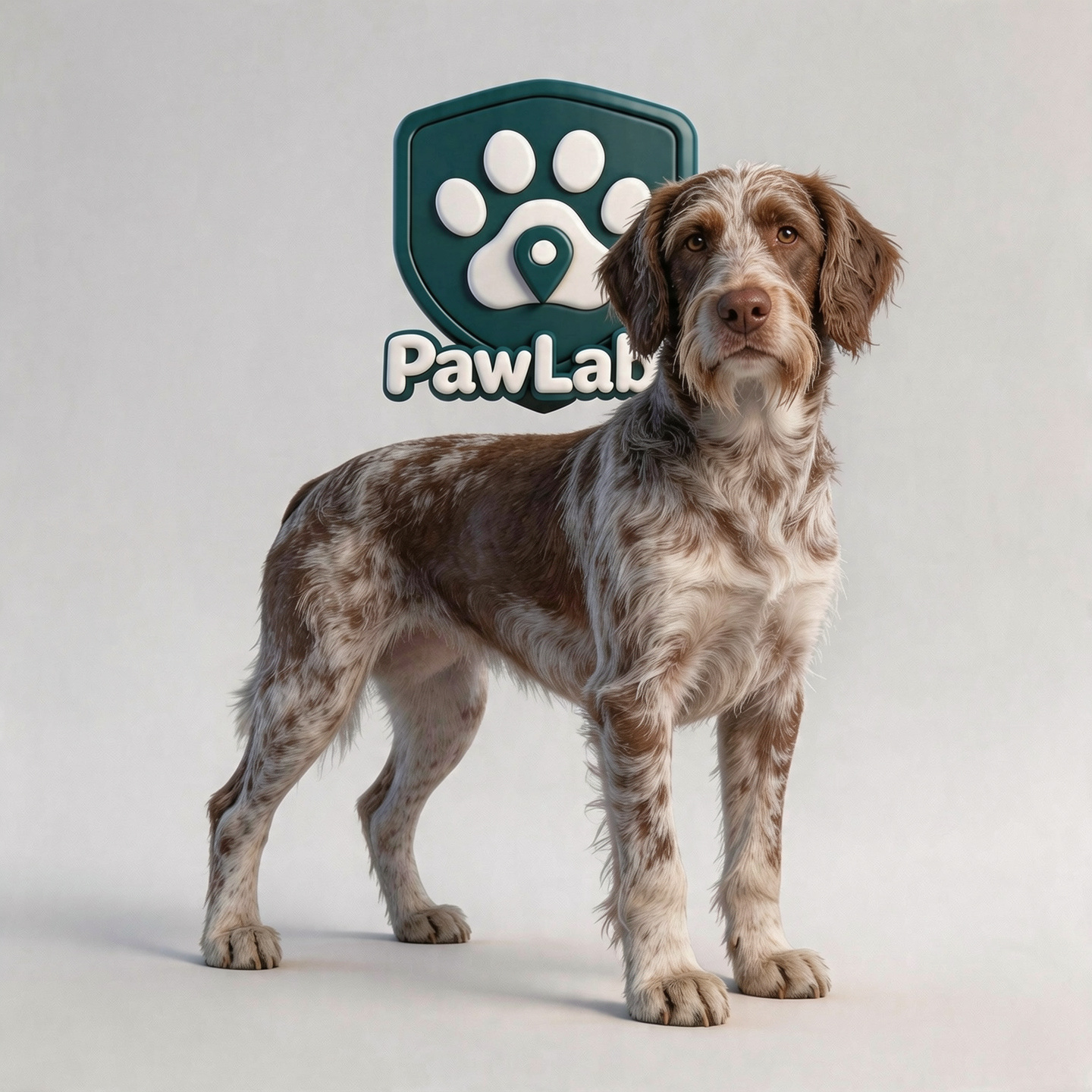
Wirehaired Pointing Griffon
A rugged, versatile hunter with a loyal heart and boundless energy.
Original Role: Pointing and retrieving game
💪 Strengths
- + Exceptional hunting and pointing instincts
- + Strong bond with family
- + Adaptable to various terrains
⚠️ Weaknesses
- − High energy can be overwhelming for inactive owners
- − Potential for stubbornness during training
📜 Breed History
The Wirehaired Pointing Griffon, often just called the Griffon, has its roots in the late 19th century, emerging from the vision of a Dutch breeder named Eduard Karel Korthals. Korthals sought to create the ultimate versatile hunting dog, one that could point, retrieve, and work tirelessly across varied terrains—swamps, fields, and forests alike. Starting in the Netherlands and later refining his breeding program in France, he crossed several breeds, including setters, spaniels, and pointers, with a keen focus on developing a rugged, weather-resistant coat and a sharp nose for game. By the 1880s, he’d established a distinct breed with a wiry coat and an unmatched work ethic, naming it after the mythical griffin for its strength and tenacity.
The breed’s original purpose was to assist hunters by pointing at game and retrieving both on land and in water, a role it still excels at today. Recognized by the American Kennel Club in 1916, the Wirehaired Pointing Griffon remains a rare gem in the sporting group, cherished by hunters for its adaptability and grit. Over time, it has also found a place as a devoted family companion, though its hunting instincts are never far from the surface. I’ve met breeders who swear their Griffons can scent a pheasant from a hundred yards out, a testament to Korthals’ meticulous work over a century ago. This is a breed born from purpose, not fashion, and its history reflects a dedication to function over form.
A Hunter’s Soul in a Family Dog
I’ve spent countless mornings in damp fields with Wirehaired Pointing Griffons, watching them freeze mid-stride, nose twitching, locked onto a scent I couldn’t even dream of detecting. This breed, with its scruffy beard and intense eyes, is a hunter through and through. Developed as the ultimate all-purpose gundog, the Griffon will point a quail one minute and dive into icy water for a duck the next. But don’t let that rugged exterior fool you—I’ve also seen these dogs curl up at a child’s feet after a long day, as gentle as any lapdog. They’re a paradox: fierce in the field, tender at home. Living with one means embracing both sides of that coin, and I’ll be straight with you—it’s not for everyone. Their energy and drive can wear you down if you’re not ready to match it.
Temperament & Personality
Wirehaired Pointing Griffons are loyal to a fault. I’ve known Griffs who’d follow their owner from room to room, not out of anxiety but pure devotion—they just want to be where you are. They’re affectionate without being clingy, often nudging your hand for a pat after a job well done. With family, they’re warm and playful, though I’ve noticed they can be a bit reserved with strangers at first. It’s not aggression, just a quiet assessment before they decide you’re worth their time.
Their personality shines brightest when they’ve got a purpose. I remember a Griffon named Max who’d perk up the second he saw his owner grab the hunting vest—tail wagging, eyes bright, ready for action. Without that outlet, though, they can get restless. I’ve seen bored Griffons chew through boots or pace endlessly by the door, a clear sign they need more than a quick walk. They’re not hyper like some sporting breeds, but their energy simmers just below the surface, waiting for a release.
Exercise & Activity Needs
If you’re not active, stop reading now. Griffons need serious exercise—think an hour or two daily of real, purposeful activity. A leisurely stroll won’t cut it. I’ve taken these dogs on long hikes through rough terrain, and they’re still raring to go when I’m ready to collapse. They were bred to cover ground all day, pointing game for hunters, so a game of fetch or a run isn’t just fun—it’s essential. If you hunt, even better. I’ve watched Griffons light up when they get to track a scent or retrieve a dummy; it’s like they’re finally doing what they were born for.
Without that outlet, they’ll find one. I’ve heard stories from owners who skipped a few days of exercise only to come home to a dug-up yard or a shredded couch. Mental stimulation matters too—puzzle toys or scent games can tire them out almost as much as a run. If you’ve got a big yard or access to open spaces, great. Just don’t expect them to entertain themselves all day—they want you in on the action.
Training & Intelligence
Griffons are sharp. I’ve trained a few myself, and they pick up commands fast, especially if there’s a reward involved—food or praise, they’re not picky. Their intelligence comes from a hunting background; they’re wired to read cues and solve problems, like figuring out how to flush a bird without spooking it. That said, they’ve got a stubborn streak. I’ve had moments where a Griffon just stares at me during a recall, as if to say, “Why should I?” Consistency and patience are non-negotiable.
Early socialization is key. I’ve seen unsocialized Griffons get overly protective or wary around new dogs, though they’re rarely aggressive. Positive reinforcement works best—harsh methods will shut them down. They want to please, but they also want to know there’s a point to the task. I’ve found that tying training to real-world activities, like retrieving or pointing drills, keeps them engaged. They’re not just learning; they’re working, and that’s when they thrive.
Health & Lifespan
Wirehaired Pointing Griffons are generally hardy, with a lifespan of 12 to 15 years, which is solid for a medium-sized breed. But they’re not without issues. I’ve known several with hip dysplasia, a common problem in active breeds like this. It’s heartbreaking to see a dog built for running start limping after a few years if the condition isn’t caught early. Elbow dysplasia pops up too, so regular vet checks and X-rays are worth the cost if you want to keep them moving.
They can also face eye conditions like progressive retinal atrophy—I’ve met a Griffon who went blind in his later years, though he still navigated fields by scent alone. Skin allergies are another concern; their wiry coat can hide irritation until it’s a mess. Vet bills can add up if you’re not proactive, so budget for joint supplements or allergy meds. Most breeders I’ve worked with screen for these issues, so always ask for health clearances before buying a pup. With good care, though, they often stay spry well into their senior years.
Grooming & Maintenance
That wiry coat is a blessing and a curse. It’s low-shedding, which I love—no fur tumbleweeds rolling across my floor. But it needs regular attention to avoid mats, especially around the ears and legs. I’ve spent hours brushing out burrs after a day in the brush with a Griffon; their coat picks up everything. A good steel comb and a stripping knife are your friends if you want to maintain that rough texture without it turning into a tangled mess.
Bathing isn’t frequent—maybe every six weeks unless they’ve rolled in something nasty, which, trust me, they will if given the chance. Their beard and eyebrows give them character, but food and dirt get trapped there, so a quick wipe after meals saves you grief. Ears need checking too; I’ve seen infections crop up in floppy-eared Griffs when moisture gets trapped. It’s not high-maintenance compared to some breeds, but you’ll still spend a chunk of time keeping them tidy.
Diet & Nutrition
Griffons aren’t picky eaters, but they burn a lot of calories. I’ve fed mine high-quality kibble with a focus on protein—think 25-30%—to support their muscle and energy needs. Puppies need controlled portions to avoid growing too fast, which can stress their joints. I’ve worked with owners who overfed young Griffs, only to deal with skeletal issues down the line. Adults usually do well on 2.5 to 3 cups of food a day, split into two meals, though active dogs might need more.
Raw or home-cooked diets can work if you’re diligent—I’ve known hunters who swear by raw for their Griffs, claiming it boosts stamina. Just watch for allergies; I’ve had a Griffon react to chicken with itchy paws, so we switched to fish-based food. Treats are fine, but they’ll beg with those soulful eyes, and it’s easy to overdo it. Keep an eye on their weight; a lean Griffon is a healthy one, ready for the field.
Living Conditions
Griffons can adapt to different setups, but they’re happiest with space to roam. I’ve seen them in suburban homes with big yards, tearing around like they own the place. Apartments? Possible, but only if you’re committed to long daily outings. I knew a city-dwelling Griffon who did fine, but his owner took him to a park twice a day, rain or shine. Without that, they’ll get cabin fever fast.
Climate-wise, their coat handles cold and wet well—perfect for fall hunting trips I’ve been on in drizzly woods. Heat is trickier; they’ll overheat if pushed too hard in summer. Always have water handy on hot days. They don’t need a palace, but they do need an environment where they can stretch their legs and use their nose. A bored Griffon in a small space is a recipe for trouble.
Who Should Get This Breed
If you’re an outdoor enthusiast, this might be your dream dog. I’ve met hunters and hikers who couldn’t imagine life without their Griffon—they’re partners in every adventure, whether it’s tracking game or just exploring trails. Families with older kids can be a great fit too; I’ve seen Griffs play gently with tweens, matching their energy without getting rough. If you’ve got time to train and exercise them, and you value a dog who’s both a worker and a companion, you’ll fall hard for this breed. Their loyalty and versatility are hard to beat.
Who Should NOT Get This Breed
If you’re a couch potato, look elsewhere. I’ve talked to people who got a Griffon thinking they’d magically adapt to a sedentary life, only to be overwhelmed by the 5am zoomies and constant need for action. They’re not ideal for first-time owners either—those stubborn moments in training can frustrate someone without experience. If you’re in a tiny apartment with no access to green space, or if you work long hours and can’t provide stimulation, this breed will suffer. I’ve seen neglected Griffs turn destructive or withdrawn, and it’s not fair to them. They need a committed, active owner, no exceptions.
❓ Wirehaired Pointing Griffon FAQs
The questions people ask most, answered from this breed's trait scores.
Is the Wirehaired Pointing Griffon good with children?
The Wirehaired Pointing Griffon scores 7/10 for child-friendliness, making it a good match for families with children. That score reflects the breed's typical temperament, not any individual animal — early socialisation and how the dog was raised matter just as much. Supervise interactions with toddlers whatever the breed.
Does the Wirehaired Pointing Griffon get along with other pets?
Scoring 6/10 for pet-friendliness, the Wirehaired Pointing Griffon is usually fine with other pets once introduced properly. Prey drive matters here as well as sociability: breeds built to chase can live happily with a household cat they grew up with and still pursue an unfamiliar one.
How much exercise does the Wirehaired Pointing Griffon need?
The Wirehaired Pointing Griffon rates 8/10 for energy and needs at least an hour to 90 minutes a day, and it should be real exercise rather than a stroll. Under-exercised, this is a breed that finds its own entertainment — usually at the expense of your furniture. The breed was originally developed for pointing and retrieving game, which is where that requirement comes from.
Does the Wirehaired Pointing Griffon shed a lot?
At 4/10 for shedding, the Wirehaired Pointing Griffon sheds lightly. It has a medium wire coat. Worth knowing: low shedding is not the same as hypoallergenic — most people react to proteins in dander and saliva, not to hair itself, so no breed is genuinely allergy-free.
Is the Wirehaired Pointing Griffon easy to train?
The Wirehaired Pointing Griffon scores 7/10 for trainability, making it responsive and straightforward to train. It scores 8/10 for intelligence — worth separating from trainability, because a clever breed that has decided not to listen is harder work than a simpler one that wants to.
What is the average lifespan of the Wirehaired Pointing Griffon?
The Wirehaired Pointing Griffon typically lives 12–15 years. We rate the breed 7/10 for general health robustness. Individual lifespan depends heavily on genetics, weight management and veterinary care.
How big does the Wirehaired Pointing Griffon get?
A full-grown Wirehaired Pointing Griffon usually weighs 50–70 lbs and stands roughly 20–24 inches at the shoulder. That places it in the medium size band. Males generally sit at the upper end of both ranges.
Does the Wirehaired Pointing Griffon bark a lot?
Rated 5/10 for barking, the Wirehaired Pointing Griffon barks a moderate amount. Training and adequate exercise both reduce nuisance barking, but they will not turn a naturally vocal breed into a silent one.
Is the Wirehaired Pointing Griffon suited to apartment living?
The Wirehaired Pointing Griffon is a difficult fit for apartment living. It scores 7/10 for adaptability, 8/10 for energy and 5/10 for barking — the three traits that decide this. Floor space matters far less than whether the breed can settle indoors and stay quiet while you are out.
Is the Wirehaired Pointing Griffon a good choice for first-time owners?
On balance the Wirehaired Pointing Griffon is manageable for a first-time owner who is willing to put the work in early, based on its trainability (7/10), adaptability (7/10) and energy level (8/10). The most common reason a first dog does not work out is a mismatch between the breed's daily needs and the owner's actual routine, rather than anything about the breed itself.
Written and reviewed by PawLabs Editorial Team
We build PawLabs from published kennel club breed standards and veterinary reference sources. Profiles are drafted with AI assistance against that source data, then reviewed and corrected by a person before anything is published. We say so because you should know how the thing you're reading was made. How we research breeds · Report a correction
Note: Breed profiles are general reference, not veterinary advice. For anything concerning your own animal, talk to a vet who can examine them.