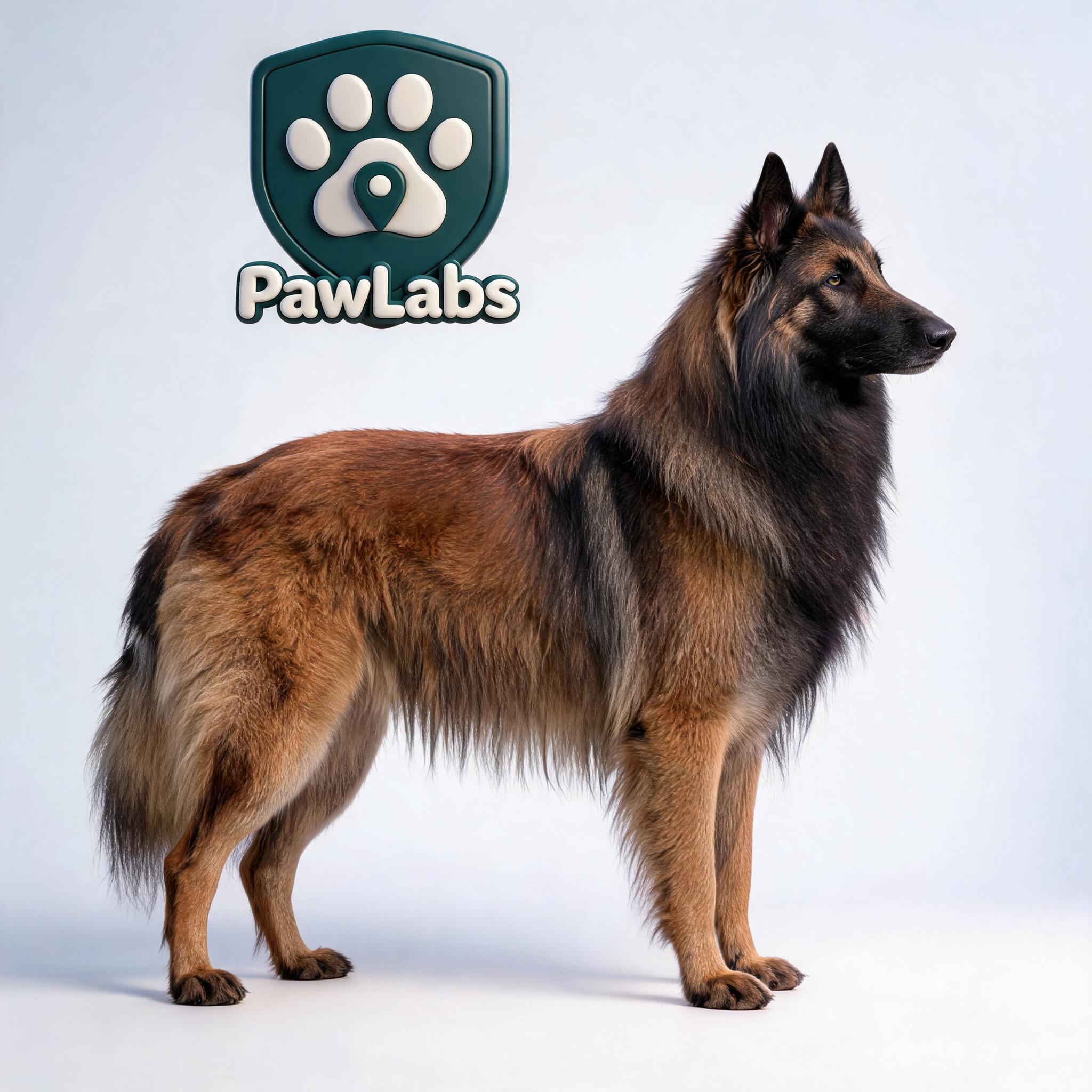
Belgian Tervuren
A striking, intelligent herding dog with boundless energy and loyalty.
Original Role: Herding livestock, guard dog
💪 Strengths
- + Exceptional intelligence and trainability for complex tasks
⚠️ Weaknesses
- − High energy can lead to destructive behavior if under-exercised
📜 Breed History
The Belgian Tervuren hails from Belgium, one of four closely related breeds of Belgian Shepherd Dogs developed in the late 19th century. Named after the village of Tervuren, where a key breeder, M. Corbeel, refined the variety, this breed emerged as a distinct type among the Belgian Shepherds, alongside the Malinois, Groenendael, and Laekenois. Originally, these dogs were versatile working animals, tasked with herding livestock and guarding farms in the rugged Belgian countryside. Their intelligence, agility, and endurance made them indispensable to shepherds facing harsh weather and long days.
The Tervuren’s striking fawn or mahogany coat with black overlay set it apart visually, though it shares the same working drive as its siblings. By the early 20th century, the breed gained recognition for its elegance and versatility, often showcased in dog shows while still excelling in practical roles. During World War I, Belgian Shepherds, including Tervurens, served as messenger dogs and sentries, proving their courage and adaptability. The American Kennel Club recognized the Tervuren as a separate breed in 1959, cementing its status beyond just a variety of Belgian Shepherd. Today, while they’re still used in herding and protection work, many Tervurens shine in dog sports like agility and obedience, reflecting their deep-rooted need for mental and physical challenges.
The Belgian Tervuren: A Whirlwind of Brains and Energy
I’ve spent countless hours with Belgian Tervurens over the years, and let me tell you, this breed is not for the faint of heart. They’re a stunning mix of elegance and raw power, with their rich fawn coats and piercing, watchful eyes. But beneath that gorgeous exterior is a dog that’s wired to work—hard. I’ve watched a Tervuren herd imaginary sheep in a suburban backyard at 6 a.m., just because their instincts wouldn’t let them rest. They’re brilliant, loyal, and protective, but they’ll test your patience if you don’t match their energy or give them a job to do. Living with a Tervuren feels like partnering with a high-octane athlete who also happens to be a chess master.
Temperament & Personality
Day-to-day life with a Belgian Tervuren is intense. They bond fiercely with their people, often picking one person as their primary human—I’ve seen them follow their chosen owner from room to room, just waiting for a command or a game. They’re not overly cuddly, though; their affection shows through shared activities rather than lap-sitting. With strangers, they’re aloof at best, sometimes downright suspicious. I’ve had Tervurens bark at delivery drivers as if they were invading the house, even after months of seeing the same person. They’re natural protectors, which makes them great watchdogs, but it also means they need early socialization to avoid overreacting to every new face or sound.
They’ve got a serious side, but there’s playfulness too. I remember a young Tervuren who’d invent games with a stick, tossing it in the air and catching it for hours if I didn’t intervene. Still, their intensity can overwhelm. If you’re not engaging them, they’ll find their own entertainment—often by redecorating your shoes or digging up the garden.
Exercise & Activity Needs
If you’re not ready to commit to at least an hour or two of vigorous exercise daily, don’t even think about a Tervuren. I’m talking long runs, intense fetch sessions, or hikes through challenging terrain. I’ve taken Tervurens on 5-mile jogs, and they’re still bouncing around afterward, looking at me like, “Is that all?” They were bred to herd livestock across vast fields, so a quick walk around the block won’t cut it. Without enough physical outlet, they get restless, and a restless Tervuren is a recipe for chewed furniture or incessant barking.
Mental stimulation is just as critical. Puzzle toys, obedience drills, or agility courses are fantastic ways to tire them out. I’ve seen a Tervuren master a complex obstacle course in a single afternoon, just because they thrive on problem-solving. If you can’t provide both physical and mental work, they’ll channel that energy into mischief.
Training & Intelligence
Training a Belgian Tervuren is a joy if you’re consistent, but a nightmare if you’re not. They’re among the smartest dogs I’ve worked with—capable of learning commands in just a few repetitions. I’ve taught a Tervuren to fetch specific items by name in under a week. But their intelligence comes with a catch: they’ll test boundaries. If they sense weakness, they’ll ignore you or invent their own rules. I’ve had a Tervuren refuse a “sit” command because they thought chasing a squirrel was more important—firmness and patience turned that around, but it took effort.
Positive reinforcement works best. Harsh methods can backfire, making them stubborn or anxious. Start training early, and never skip socialization. They need exposure to different people, dogs, and environments to temper their natural wariness. A well-trained Tervuren is a marvel—think police work, search-and-rescue, or competitive obedience. But half-hearted training leads to a frustrated, willful dog.
Health & Lifespan
Belgian Tervurens generally live 12 to 14 years, which is decent for a large breed. But they’re not without health challenges. Hip and elbow dysplasia are common—I’ve known owners who’ve spent thousands on surgeries or physical therapy to manage it. Progressive retinal atrophy, a degenerative eye condition, also pops up in some lines, so eye exams from a vet are non-negotiable. Epilepsy is another concern; I’ve seen a sweet Tervuren start having seizures at age 3, and it broke the owner’s heart to manage.
They’re prone to bloat too, a life-threatening condition where the stomach twists. Feeding smaller meals and avoiding exercise right after eating can help. Regular vet checkups and a reputable breeder who screens for genetic issues are your best defenses. Expect moderate vet costs over their lifetime, but be prepared for big expenses if something like dysplasia kicks in.
Grooming & Maintenance
That gorgeous double coat of the Tervuren—medium-length, thick, and weather-resistant—comes with a price. They shed, especially during seasonal changes in spring and fall. I’ve swept up enough fur from a Tervuren to knit a sweater during those blowout periods. Weekly brushing with an undercoat rake keeps the shedding manageable and prevents mats, but you’ll still find hair everywhere. Baths every 6-8 weeks are usually enough unless they’ve rolled in something vile during a hike.
Nails need trimming every few weeks—they grow fast with all that activity. Ears and teeth should be checked regularly too; I’ve seen ear infections crop up if debris builds up after outdoor adventures. Grooming isn’t overwhelming, but it’s a steady commitment to keep them looking sharp.
Diet & Nutrition
Feeding a Belgian Tervuren means fueling a high-energy machine. They do well on high-quality kibble or raw diets tailored for active, large breeds—think 3-4 cups of food daily, split into two meals to reduce bloat risk. I’ve worked with owners who swear by adding fish oil for coat health, and I’ve seen the glossy results myself. Protein and fat levels need to match their activity; a working Tervuren might need more calories than one in a less active home.
Watch for food sensitivities, though. I’ve known Tervurens who developed itchy skin from certain grains, so a limited-ingredient diet solved the issue. Keep an eye on weight—they’re lean, athletic dogs, and extra pounds strain their joints. Treats are fine for training, but don’t overdo it. Fresh water at all times is a must, especially after exercise.
Living Conditions
Apartment life with a Tervuren? Forget it unless you’re dedicated to multiple daily outings. They need space to move—a house with a fenced yard is ideal. I’ve seen a Tervuren pace endlessly in a small space, visibly stressed without room to roam. They’re built for the outdoors, thriving in climates with distinct seasons thanks to their insulating coat. Hot, humid areas can be tough; I’ve watched them pant heavily in summer without proper shade or cooling.
They’re happiest in rural or suburban settings where they can explore. If you’re in a city, you’d better have a park nearby and the time to get there daily. They don’t do well left alone for long stretches—separation anxiety can kick in, leading to destructive behavior. A home where someone’s around often suits them best.
Who Should Get This Breed
The ideal Tervuren owner is active, experienced, and ready for a challenge. If you’re a runner, hiker, or someone who loves dog sports like agility or obedience trials, this breed will be your perfect partner. I’ve seen Tervurens thrive with owners who train them for search-and-rescue or herding trials—they live for that purpose. You should also be confident in handling a strong-willed dog and committed to providing structure and socialization from day one. A family with older kids who understand boundaries can work well, as long as everyone’s on board with the exercise demands.
Who Should NOT Get This Breed
If you’re a first-time dog owner, live a sedentary lifestyle, or can’t dedicate serious time to exercise and training, a Belgian Tervuren isn’t for you. I’ve seen them overwhelm novices who underestimate their needs—one owner I knew gave up after the dog destroyed their couch out of boredom. They’re not great for homes with very young children or multiple other pets, as their herding instincts can lead to nipping or pushiness. If you work long hours and can’t arrange for stimulation during the day, they’ll suffer. And if you just want a low-maintenance companion to lounge with, look elsewhere—this breed demands engagement.
❓ Belgian Tervuren FAQs
The questions people ask most, answered from this breed's trait scores.
Is the Belgian Tervuren good with children?
The Belgian Tervuren scores 6/10 for child-friendliness, making it usually fine with children who have been taught to handle a dog respectfully. That score reflects the breed's typical temperament, not any individual animal — early socialisation and how the dog was raised matter just as much. Supervise interactions with toddlers whatever the breed.
Does the Belgian Tervuren get along with other pets?
Scoring 5/10 for pet-friendliness, the Belgian Tervuren is usually fine with other pets once introduced properly. Prey drive matters here as well as sociability: breeds built to chase can live happily with a household cat they grew up with and still pursue an unfamiliar one.
How much exercise does the Belgian Tervuren need?
The Belgian Tervuren rates 9/10 for energy and needs two hours or more a day, every day, including the days you do not feel like it. Under-exercised, this is a breed that finds its own entertainment — usually at the expense of your furniture. The breed was originally developed for herding livestock, guard dog, which is where that requirement comes from.
Does the Belgian Tervuren shed a lot?
At 7/10 for shedding, the Belgian Tervuren sheds noticeably, and you will find hair on clothes and furniture. It has a medium double coat. Worth knowing: low shedding is not the same as hypoallergenic — most people react to proteins in dander and saliva, not to hair itself, so no breed is genuinely allergy-free.
Is the Belgian Tervuren easy to train?
The Belgian Tervuren scores 9/10 for trainability, making it exceptionally trainable, and happiest when it has something to learn. It scores 9/10 for intelligence — worth separating from trainability, because a clever breed that has decided not to listen is harder work than a simpler one that wants to.
What is the average lifespan of the Belgian Tervuren?
The Belgian Tervuren typically lives 12–14 years. We rate the breed 6/10 for general health robustness. Individual lifespan depends heavily on genetics, weight management and veterinary care.
How big does the Belgian Tervuren get?
A full-grown Belgian Tervuren usually weighs 45–75 lbs and stands roughly 22–26 inches at the shoulder. That places it in the large size band. Males generally sit at the upper end of both ranges.
Does the Belgian Tervuren bark a lot?
Rated 6/10 for barking, the Belgian Tervuren barks a moderate amount. Training and adequate exercise both reduce nuisance barking, but they will not turn a naturally vocal breed into a silent one.
Is the Belgian Tervuren suited to apartment living?
The Belgian Tervuren is a difficult fit for apartment living. It scores 6/10 for adaptability, 9/10 for energy and 6/10 for barking — the three traits that decide this. Floor space matters far less than whether the breed can settle indoors and stay quiet while you are out.
Is the Belgian Tervuren a good choice for first-time owners?
On balance the Belgian Tervuren is manageable for a first-time owner who is willing to put the work in early, based on its trainability (9/10), adaptability (6/10) and energy level (9/10). The most common reason a first dog does not work out is a mismatch between the breed's daily needs and the owner's actual routine, rather than anything about the breed itself.
Written and reviewed by PawLabs Editorial Team
We build PawLabs from published kennel club breed standards and veterinary reference sources. Profiles are drafted with AI assistance against that source data, then reviewed and corrected by a person before anything is published. We say so because you should know how the thing you're reading was made. How we research breeds · Report a correction
Note: Breed profiles are general reference, not veterinary advice. For anything concerning your own animal, talk to a vet who can examine them.